


Page 46 - Abbott
P. 46
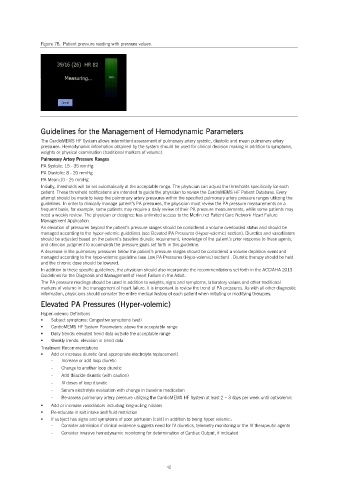
Figure 78. Patient pressure reading with pressure values.
Guidelines for the Management of Hemodynamic Parameters
The CardioMEMS HF System allows intermittent assessment of pulmonary artery systolic, diastolic and mean pulmonary artery
pressures. Hemodynamic information obtained by the system should be used for clinical decision making in addition to symptoms,
weights or physical examination (traditional markers of volume).
Pulmonary Artery Pressure Ranges
PA Systolic: 15 - 35 mmHg
PA Diastolic: 8 - 20 mmHg
PA Mean:10 - 25 mmHg
Initially, thresholds will be set automatically at the acceptable range. The physician can adjust the thresholds specifically for each
patient. These threshold notifications are intended to guide the physician to review the CardioMEMS HF Patient Database. Every
attempt should be made to keep the pulmonary artery pressures within the specified pulmonary artery pressure ranges utilizing the
guidelines. In order to clinically manage patient’s PA pressures, the physician must review the PA pressure measurements on a
frequent basis, for example, some patients may require a daily review of their PA pressure measurements, while some patients may
need a weekly review. The physician or designee has unlimited access to the Merlin.net Patient Care Network Heart Failure
Management Application.
An elevation of pressures beyond the patient’s pressure ranges should be considered a volume overloaded status and should be
managed according to the hyper-volemic guidelines (see Elevated PA Pressures (Hyper-volemic) section). Diuretics and vasodilators
should be adjusted based on the patient’s baseline diuretic requirement, knowledge of the patient’s prior response to these agents,
and clinician judgment to accomplish the pressure goals set forth in this guideline.
A decrease in the pulmonary pressures below the patient’s pressure ranges should be considered a volume depletion event and
managed according to the hypo-volemic guideline (see Low PA Pressures (Hypo-volemic) section) . Diuretic therapy should be held
and the chronic dose should be lowered.
In addition to these specific guidelines, the physician should also incorporate the recommendations set forth in the ACC/AHA 2013
Guidelines for the Diagnosis and Management of Heart Failure in the Adult.
The PA pressure readings should be used in addition to weights, signs and symptoms, laboratory values and other traditional
markers of volume in the management of heart failure. It is important to review the trend of PA pressures. As with all other diagnostic
information, physicians should consider the entire medical history of each patient when initiating or modifying therapies.
Elevated PA Pressures (Hyper-volemic)
Hyper-volemic Definitions
Subject symptoms: Congestive symptoms (wet)
CardioMEMS HF System Parameters: above the acceptable range
Daily trends: elevated trend data outside the acceptable range
Weekly trends: elevation in trend data
Treatment Recommendations
Add or increase diuretic (and appropriate electrolyte replacement)
- Increase or add loop diuretic
- Change to another loop diuretic
- Add thiazide diuretic (with caution)
- IV doses of loop diuretic
- Serum electrolyte evaluation with change in baseline medication
- Re-assess pulmonary artery pressure utilizing the CardioMEMS HF System at least 2 – 3 days per week until optivolemic
Add or increase vasodilators including long-acting nitrates
Re-educate in salt intake and fluid restriction
If subject has signs and symptoms of poor perfusion (cold) in addition to being hyper-volemic:
- Consider admission if clinical evidence suggests need for IV diuretics, telemetry monitoring or the IV therapeutic agents
- Consider invasive hemodynamic monitoring for determination of Cardiac Output, if indicated
42

